The sound of O-EZ: a poetry-born, Brooklyn-forged musical legacy
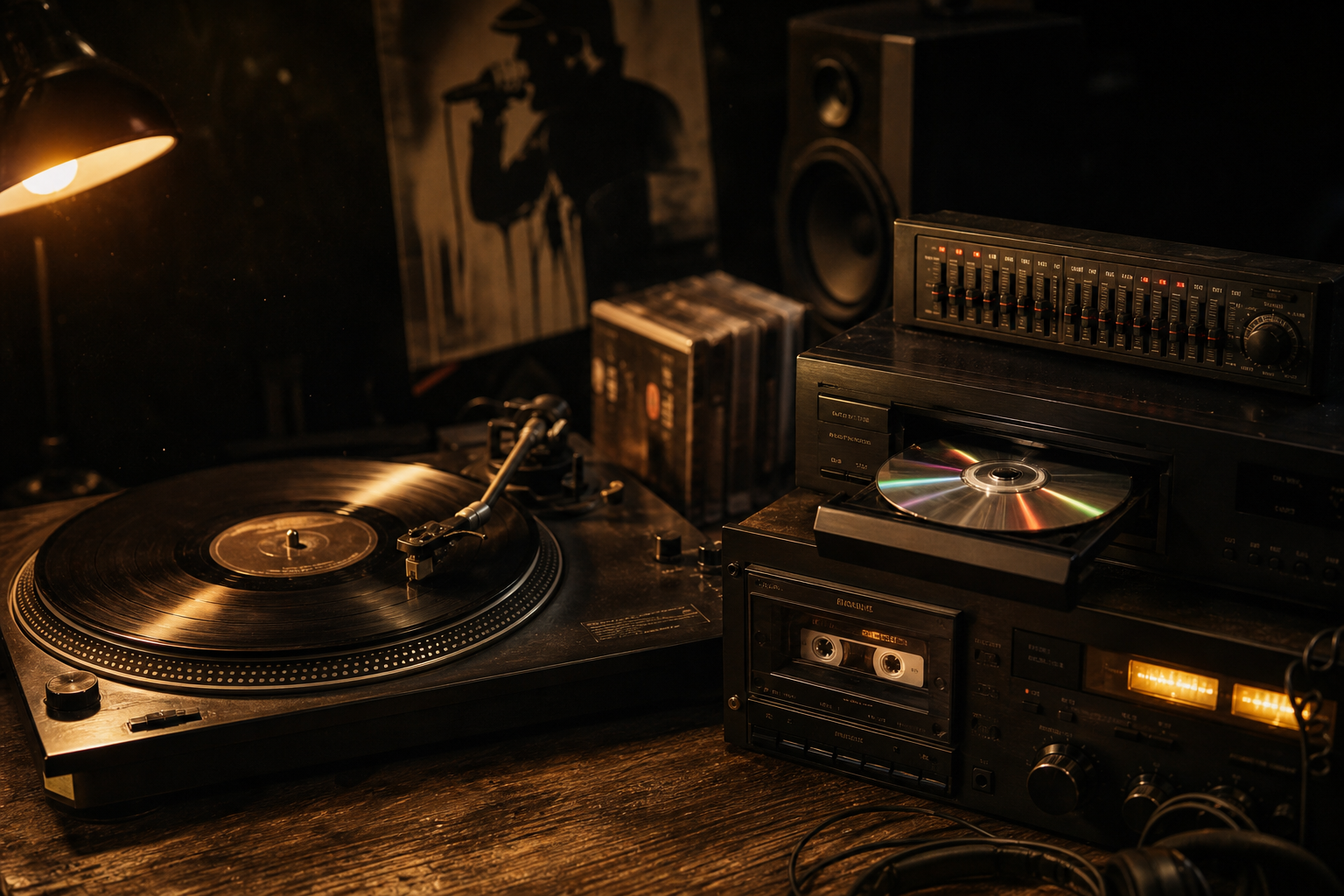
O-EZ’s musical journey began in 1996, around age twelve, in his mother’s apartment on 45th Street in Brooklyn. He hosted house parties there, assembling early DJ sets with a turntable, CD player, cassette player, recorded radio mixes, and a makeshift car‑radio equalizer. The resourceful setup was raw, formative, and unforgettable — the place where his voice first learned to carry rhythm.
It was also where he began translating poetry into melody, shaping the spoken word into songs that audiences now cherish. Today, his catalog spans approximately 90 to 180 songs, with about 15 published so far — a growing archive of lyrical storytelling and performance-driven sound.
Origins
Brooklyn, 45th Street — 1996
House parties, analog gear, and a self-built sound system shaped his first DJ performances.
Catalog
90–180 songs written
About 15 officially published, with new releases in motion.
Sound identity
Spoken word, melodic storytelling, and performance energy
Each track is built to move an audience — intimate enough for headphones, expansive enough for the stage.
A Brooklyn beginning, tuned by ingenuity.
In 1996, at about age 12, O‑EZ’s ear for rhythm came alive in Brooklyn, New York — not on a stage, but inside house-party rooms crowded with friends, kin, and the pulse of the city. The setup was bare: a turntable, a CD player, a cassette deck, recorded radio mixes, and a makes‑shift equalizer assembled with whatever could be found. What he lacked in equipment, he answered with precision, improvisation, and a fearless command of the room.
Early Kit
Turntable · CD · Cassette · Radio Mixes · DIY EQ
Those intimate, improvised stages shaped the way his performance energy moves today — vivid, close, and crafted for the people in the room.
From handwritten poems to melodies, the transition was natural. Words became hooks; cadence became song. He began stitching spoken‑word lines into choruses, building tracks that carried both the literary weight of poetry and the pulse of a DJ set. The early ingenuity became a permanent signature — a sound shaped by resourcefulness and an unmistakable performance presence.
Today, that foundation has grown into a catalog of roughly 90 to 180 songs, with around 15 published — each one echoing the first rooms where he learned to command energy, story, and sound.
The path in three movements
-
01
House‑party stagecraft
Intimate Brooklyn rooms, built on limited tools and limitless instinct.
-
02
Poetry to melody
Handwritten verses evolving into rhythm, hooks, and full compositions.
-
03
Catalog with range
Roughly 90–180 songs written and about 15 published — a body of work built on story and sound.
A catalog shaped by memory, rhythm, and the poetry that started it all.
O‑EZ writes music the way he writes verse — with cadence, vulnerability, and cinematic detail. Every song grows out of a living archive of poems, lived experience, and the pulse of spoken word. The melodies carry the weight of memory, and the rhythm moves like a performance that never leaves the stage.
Origins
The sound began in Brooklyn — early years of open mics, borough basements, and late‑night notebooks. That borough‑forged grit still shapes the atmosphere, but the catalog now moves with refined production, soulful restraint, and an emotional honesty that feels close enough to touch.
Selective catalog
Only about 15 songs have been released so far, chosen from a much larger body of roughly 90 to 180 written pieces. The releases are intentional — personal entries curated for impact, each one a distilled chapter from a larger creative life.
Voice + Songcraft
Poetry that became melody — a disciplined, soulful architecture of sound.
In 1996, in Brooklyn, O-EZ began shaping spoken word into rhythm with minimal tools and an urgent desire to be heard. That constraint became a signature: sparse resources sharpened cadence, and every line had to carry both story and beat.
The work grew through grassroots experimentation — poetry rooms, taped rehearsals, improvised sessions — evolving into full compositions where language leads melody. Today the catalog holds roughly 90 to 180 songs, with about 15 published, each one rooted in lived narrative and crafted to resonate on stage and in headphones.

90–180
Songs Written
15
Published Titles
Diez Tres Veces | Bachata Vibes Vol 1
Un lanzamiento destacado del catálogo de O‑EZ — audaz, rítmico y hecho para el escenario.
O‑EZ Official
Explora más música en esta página para sumergirte en el catálogo y en los próximos lanzamientos.
Una entrada cinematográfica al sonido escénico de O‑EZ.
Este lanzamiento captura la energía audaz y lírica que define la presencia en vivo de O‑EZ — un momento destacado dentro de un catálogo en constante evolución.
The soundwork behind O-EZ — answers for bookers, listeners, and collaborators.
A music story rooted in poetry, performance, and the pulse of New York. These notes share the creative arc, the catalog, and how to connect with O-EZ for releases, shows, and collaborations.
Quick facts
The musical journey began in 1996 in Brooklyn, New York. O-EZ has written approximately 90–180 songs with around 15 published to date.